Being a parent is nonstop hard work, making it challenging to stay on top of political news for families in Washington. Below are highlights and commentary on key policy updates and headlines from Oct. 11–19 that impact parents, kids, and communities across the state. The opinions shared here are those of the author and do not represent Seattle’s Child.
UPDATE: State WIC benefits could hold through November
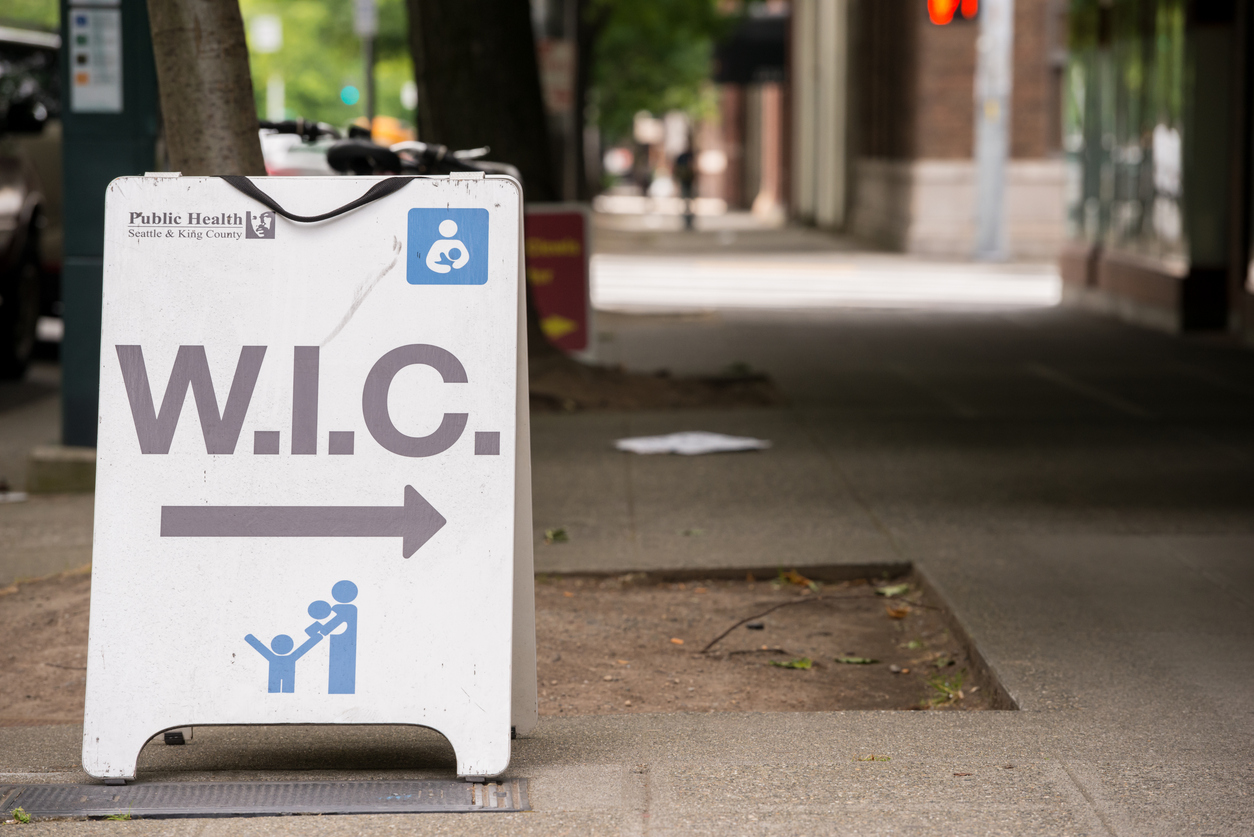
Some good news from the Washington State Standard amid the ongoing federal shutdown: federal food benefits for Washington mothers and their babies will continue into mid-to-late November despite the government shutdown, the state announced Thursday.
Funding from the U.S. Department of Agriculture will allow the state to keep up food benefits under the Women, Infants and Children program, known as WIC, and support the 11 workers still administering it in Washington.
“It’s definitely a relief,” said Nicole Flateboe, executive director of Nutrition First, the state’s WIC association. “It’s food benefits through Thanksgiving, hopefully.”
The estimate of assistance lasting until mid-to-late November is based on current use. If enrollees start increasing their usage, the funding could run out sooner, according to the state Department of Health. Read the whole story: “Washington WIC program now funded almost through November.”
However, if federal funding is not restored by October 31st, nearly one million Washingtonians could lose food benefits provided by the SNAP program.
Bone up on the 8 candidates for Seattle School Board
Seattle Public Schools faces a stream of challenges and changes in the next few years, not the least of which will be breaking in a new district superintendent (no decision announced on that front yet). And, of course, trying to meet the needs of all students equitably in the face of a tight state budget and potential loss of federal education funds used as a political cudgel. All of which makes the races for four seats on the Seattle Public Schools Board of Directors critical.
Ballots for the upcoming King County general election are due Nov. 4. Fourteen candidates threw their names into the ring for the open board positions, a pool that shrank to eight in the August primary. To get to know those candidates and what each believes to be the biggest challenge facing SPS, check out our article “Nov. 4 Election: Four Seattle School Board seats on ballot.” And for more about each candidate, take a look at this piece by The Seattle Times.
Take action: Your vote is your voice. The general election will also decide critical city and county roles, including mayor, King County executive, Seattle City Council seats, and more. If your ballot didn’t arrive in the mail, contact King County Elections for a replacement. Get your ballot to a drop box or in the mail on or before election day, Nov. 4.
Despite the news, good things do happen
Now and then, there’s good news. When I see a good news item, I wonder why we don’t see more of them. We need them for balance. It’s not that good things aren’t happening every hour of every day; it’s that, in most news organizations, the heavier items take precedence. With an eye toward rightsizing, I submit to you this video of Washington state troopers rescuing a kitten from under an I-5 barrier near Tacoma. Share it with your kids. Tell them that each one of us can do good in the world.
Study says COVID school closures not worth the cost
Closing schools during the early stages of the COVID-19 pandemic led to widespread academic losses for students and $2 trillion in future income losses. Were those hits worth the 8% reduction in the spread of COVID?
Researchers at the University of Washington and Oxford University don’t think so, according to a KUOW report this week.
In their new study, the researchers found that school closures were less effective at reducing disease spread than precautions. For example, the relatively inexpensive employment of mask mandates reduced COVID transmission by nearly 20%, researchers found. In all, they examined 11 interventions to determine which, or which combination, worked best. The combination of mask mandates, public testing, contact tracing, social distancing, and workplace closures reduced the COVID death rate by about 70%.
By comparison, the study authors estimate that school closures helped prevent 80,000 deaths. While that’s nothing to sneeze at, researchers determined that readily available tests, social distancing, workplace closures, and masks could have saved trillions and cut the COVID death rate in half without closing schools.
Easily track measles cases in Washington
Washington has seen 11 confirmed measles cases this year, all tied to international travel, according to the Washington Department of Health. Five were children under 5 years old, one was older than 5, and the others were adults. Most recently, an infant was diagnosed in Spokane County, linked to a case in Idaho.
How do you stay on top of what’s happening with this once-eradicated disease that has been sweeping across the country? Washington’s Department of Health has launched an online tracker showing locations where people with the disease have visited. The map is a great new tool for determining if anyone in your family has been exposed. The last confirmed exposure was Oct. 13 at SeaTac airport between 11:30 a.m. and 2:40 p.m. The incubation period for measles is 21 days.
For more information, check out “How to track measles exposures across WA.”
Denny Blaine Park nude beach remains at least until spring
Denny Blaine Park, the 2-acre park on Lake Washington where members of the LGBTQ+ community have comfortably bathed nude for decades, is back in the news this week. I admit that the controversy has become a sort of “pet” for this column. That’s because it begs the real question: should kids or other unsuspecting visitors be exposed to nudity in a city park?
The recap: A group of park neighbors sued the city and the Seattle Department of Parks and Recreation back in April, asking the court to close the park to the public to stop nudity in the park and what they called lewd activities on the beach.
King County Superior Court Judge Samuel Chung then charged the parks department with coming up with a plan that would suit both sides — the nudists and the park neighbors. The department’s solution was to erect barriers to block the view of the nude beach section from the rest of the park, post warning signs, and increase the presence of park rangers.
This week, Judge Samuel Chung ruled that the city’s solution is enough for now. Denny Blaine Park may stay open at least until next spring, when the case will enter a new phase with another hearing.
I have to say, I appreciate the city bending over backwards to address lewd behavior at the park and appease both sides of the debate. Parks officials have vowed to make Denny Blaine “a hub of safety and community,” according to an article in The Seattle Times.
How community is supposed to work
A Kitsap County food bank has a finger on the pulse of its community. Bremerton Foodline opened its doors last week to federal employees and military families impacted by the federal shutdown (for which, by the way, there is no end in sight). The organization created a two-hour shopping period dedicated to the 21,000 federal employees who have not been paid since Oct. 1. Check out this interview with KUOW’s Rob Wood. At a time when so much is in flux and so many threads of safety are unraveling, it’s good to see the community step up to fill in the gaps and help families meet basic needs.
Op Ed: It was hard for me to watch this Trump move
President Donald Trump has done a lot of lousy and often unlawful things since taking office last January. But perhaps the most egregious and symbolic move came this week, when Trump ordered the East Wing of the White House — which, from its construction, has been called “the people’s house” — to be demolished.
By this action, the president literally buried American history. The East Wing held the offices of all the first spouses since Eleanor Roosevelt, both Democrat and Republican. Thousands of schoolchildren visited the wing every year, and young girls in particular found inspiration in the accomplishments of the first ladies who worked there. In its place, Trump plans to build a self-named grand ballroom.
The president ordered the teardown without approval from the five committees and commissions charged with overseeing physical changes to the White House complex. The cost of the planned ballroom, which will seat between 600 and 1,000 people, depending on which Trump statement you choose, is estimated at $300 million and will be funded by private donors. This list includes all the big tech companies vying for his favor. Here again is the president using his position and money from his billionaire circle to pad his own ego.
This matters to me as a parent. The White House does not belong to Donald Trump. Review, public input, debate, and agreement are key elements in this democracy. Trump’s action, without any review or public input, tramples over those tenets. Moreover, it is a wasteful slap in the face of every American individual, grandparent, parent, or child threatened by ICE raids, safety net cuts, attacks on gender identity, racism, reversals of bodily freedoms, education program closures, and myriad other harms resulting from the Trump administration’s policies and his more than 210 executive orders.
Perhaps the president could ask his donor friends to cough up $300 million to help keep the Supplemental Nutrition Assistance Program (SNAP) benefit going for the nearly 600,000 Washington families struggling to put food on the table? It would be barely a drop in the program’s nearly $100 billion annual operating budget (1.5 billion for Washington), but still.
The ballroom will overshadow the White House in size and, likely, in gilded Trumpian gaudiness. As with so many things in the last year, it is more unchecked king-making, a move by Trump, of Trump, and for Trump alone.
Still, for balance and in fairness, I offer The Washington Post editorial board’s opposite take on this issue. And here is Sen. Patty Murray’s take on it: “Sen. Patty Murray vows to fight taxpayer dollars funding Trump’s East Wing project” from The Seattle Times.