The light is already dwindling as family and friends begin to stroll into our backyard. It’s December 21, the winter solstice, the shortest day of the year. We’ve strung party lights, set blankets on chairs, and turned on the outdoor heaters. Pork pozole is on the warmer. Drinks are in a cooler that’s hardly necessary. Guests arrive with potluck contributions in hand – a split pea soup, mulled wine, an array of holiday cookies. We greet each other with a “happy winter solstice” and settle into our annual tradition.
For most of my adult life, I’ve celebrated the solstices with a relentless devotion to the outdoors. In the summer, that’s easy. Sixteen hours of daylight. Picking cherries as the sun hangs long in the western sky. In winter, when the northern hemisphere is tilted furthest from the sun and light is so fleeting, one must be purposeful in their commitment to staying outdoors.
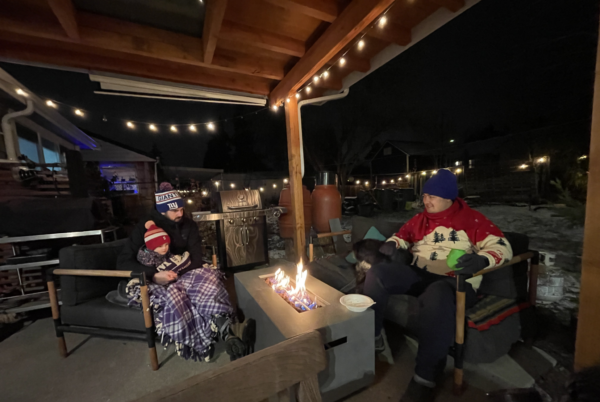
The author and a friend settle in for connection during the winter solstice celebration (Photo courtesy Casey Funke)
We’ve done so by gathering with friends and family, outside, under cover. We dress warmly, contribute hearty offerings, and calibrate our senses to the darkness that infiltrates our lives so profoundly this time of year.
Since becoming a father, the tradition has taken on further importance. It’s important to teach our kids that being outside isn’t a burden, but a blessing. We conjure the Nordic concept of Friluftsliv, which translates as “open-air living,” prioritizing being outside, no matter the conditions. We dutifully set up high chairs on the patio. Our kids, dressed in Tuffo suits and rain boots, stomp around the muddy yard under limited supervision while the adults, happy to cede parental duties to the vast outdoors for a moment, discuss holiday plans, football, and of course, our kids.
The winter solstice signifies the astrological start of winter. The sun, if we’re lucky enough to see it, arcs low in the southern sky. The day is full of anticipation. Of holiday festivities to come. . . and longer days to follow. We gather to prove that darkness can’t dampen our spirits. We gather because community is essential – for ourselves and for our children – and because traditions, the meaningful ones at least, span generations.
We celebrate because tomorrow will be longer than today, and the day after that longer still. Short increments of light, given back to us day by day, as we march toward 9 p.m. sunsets, and our hemisphere slowly tilts back toward the sun.