Being a parent is nonstop hard work, which makes following all the news happening in the city, state, and U.S. decision-making circles challenging. Here are news highlights from last week (Aug. 11-17) and a hint at what’s up this week. I hope you will consider taking action – reaching out to those who represent you and your family in Congress, state or local offices — on the issues that impact families in our state.
That’s a LOT of concealed pistols
When we polled Seattle’s Child readers a couple of years ago, asking parents their top three concerns for their children, gun access and violence was at the top of the list. Since then, state lawmakers have passed more gun access regulations, putting Washington in the top 10 states in terms of gun law strength. It’s too bad the state’s new gun permit law doesn’t kick in until May 2027. It’s spurring a rush for concealed pistol licenses now.
According to a recent report in the Washington State Standard, the number of Washingtonians licensed to carry concealed pistols has jumped significantly in anticipation of the start date of a new state law requiring prospective gun owners to get a state permit before purchasing a firearm.
What does “way up” look like? Last year, 6,000 people in Washington received concealed carry licenses. So far this year, there are nearly 14,000. That brings the total active concealed pistol licenses (CPLs) to more than 713,000 as of Aug. 1. The Standard’s reporter brought that number home: 713,000 breaks down to about one license for every 11 residents. Read the whole story in the Washington State Standard.
Take action: Follow Washington state gun legislation updates and contact lawmakers at Alliance for Gun Responsibility.
Odessa Brown Children’s Clinic is up and running on Jackson Street
Families in central and south Seattle are celebrating the reopening of Odessa Brown Children’s Clinic, now located on Jackson Street. The new facilities offer expanded mental and behavioral health, along with basic pediatric care and other medical services.
The new clinic will not impact the center’s location in south Seattle’s Othello neighborhood. Dr. Shaquita Bell, senior medical director of OBCC, told the South Seattle Emerald that patients will be able to see the same providers at either of the two locations.
The Central District clinic currently offers reproductive health, mental and behavioral health services, nutrition services, and more. A Community Advocacy Restorative Education (CARE) Clinic will open at the site in February 2026. CARE will combine medical care with support services for children who have experienced trauma, including trafficking, abuse, drug use, domestic violence, or other harm.
The clinic’s doors opened in 1970 in the basement of a church on East Spruce Street, a year after Brown died. In 1980, the clinic moved to Yesler Way, where it remained for over 40 years.
“We never forget where we come from,” Bell said, adding that providing quality care to the community is how the clinic carries Brown’s legacy forward. Read more in The Seattle Medium.
One Seattle neighborhood’s park saga
I live in the Morgan Junction neighborhood in West Seattle.
That means that at least three times a week, I pass by a gaping hole in the ground just off California Avenue on my way to the Thriftway or the bus or to grab a slice at Zeek’s pizza. It’s a BIG empty dirt bowl surrounded by chainlink fencing.
This hole is the product of 11 years of community and Seattle Parks and Recreation planning and spending. It is supposed to be a 47-acre expansion of Morgan Junction Park, with a skate park for skateboarders, and I sometimes see kids with boards looking longingly into the pit. I recently asked one what he thought of slow progress on the bowl (caused by pandemic work stoppages and contaminated soil remediation needs, among other issues).
“I’ll probably be dead before it’s done,” the 13-year-old told me. “It sucks.”
According to a report in The Seattle Times last week, the Morgan Junction delay is not unique. Many park initiatives in recent years have suffered from budgeting issues and stretched-out timelines. The skateboard park may eventually move forward, since Seattle City Councilmember Rob Saka has promised to champion the project.
Saka told the Times: “I’m going to reshare this as a priority of mine — that we get unstuck, we get unblocked from the situation, because 11 years is too long.”
Right now, Seattle Parks’ timeline for the site project soil remediation will be complete by this fall, with park construction taking place from Winter 2026 to Summer 2027. That would make the park a 13-year wait. A lifetime for the “it sucks” boy. Check out the Times story.
This Social Security crisis will impact you, today’s parent
If you, like I, earn a modest income but still hope to avoid leaning on the kids in old age by living simply with the help of Social Security, you might want to rethink that.
Because despite President Donald Trump signing a proclamation celebrating the 90th anniversary of Social Security just over a week ago, he has yet to lift a finger to avoid a deep drop in benefits for retirees forecast for the next few years. According to a report in the Washington State Standard, the latest Social Security trustees report indicates that without some action on the part of Congress and the president, the national trust fund for the aging will have to cut recipient benefits by 23% by 2033.
The trustees’ report is clear: “At that time, the fund’s reserves will become depleted and continuing program income will be sufficient to pay 77 percent of total scheduled benefits.”
And yet, despite Trump’s campaign promise to save the program, there’s been no legislation aimed at addressing the estimated decrease by 2033. The Committee for a Responsible Federal Budget wrote in a post that “solutions are needed soon to prevent insolvency and the statutorily required benefit cut.”
If one isn’t found, CRFB wrote, a “typical couple retiring just after insolvency will face an $18,400 cut in annual benefits.” Check out the Standard’s full article.
Take action: Contact your members of Congress and demand they protect the full Social Security benefit for your parents, for you when you need it, and for your kids in the future.
The Good Read: Southend parents fasting in solidarity with Gazans
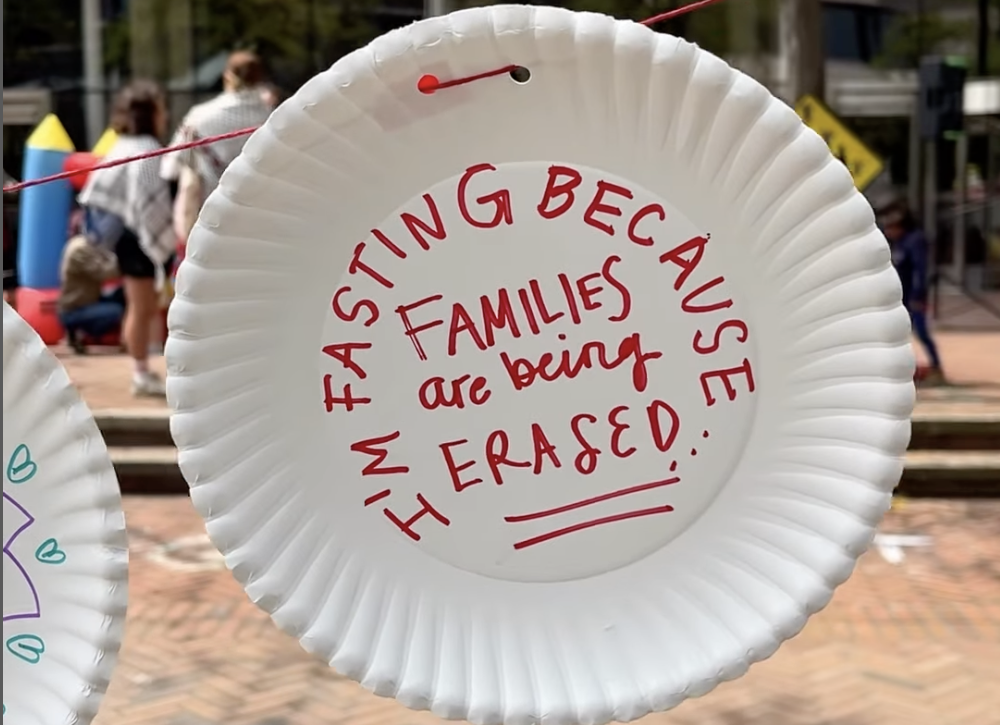
Writer and therapist Sarah Stuteville had just finished two days of fasting when she wrote the opinion post “Why South End Parents Are Fasting for Gaza — and What It Means to Care.” As Stuteville points out, “It’s hard to write when you’re hungry. It’s hard to parent when you’re hungry. When you’re not eating, the brain fog arrives fast. Last night, I was too tired to do laundry, so my kids had no clean clothes this morning.”
Parents all over South Seattle are fasting in solidarity with starving Gazans, including thousands of children. It is a symbolic act, but one that perhaps more political leaders should consider. Don’t miss this read.
Why attend the free screening of ‘Can’t Look Away’
The bottom line: Parents should not look away from the film “Can’t Look Away: The Case Against Social Media.”
Moving and important, the film exposes social media companies whose platforms — including TikTok, Snap, Instagram, and Facebook — for knowingly harming children. And the Seattle-based law firm that is fighting back on behalf of parents and families whose children have died due to that harm.
On Thursday, August 28, at 6 p.m., the Admiral Theatre in West Seattle will host a free, one-night-only screening of the film followed by a panel discussion. The conversation will include Olympia resident Aaron Ping, who lost his 16-year-old son less than a year ago, and Kelly Stonelake, the Meta whistleblower.
“You can’t be a parent in 2025 and not see the threat social media platforms pose to children,” said Emily Cherkin, founder of Seattle-based company The Screentime Consultant. Cherkin has been sounding the alarm about kids’ screen time and social media use for nearly a decade and will moderate the post-screening discussion.
What has he done this week to harm kids and families?
The barrage continues from President Donald Trump’s White House. Here’s a look at significant actions from the Trump administration in the last few weeks, which experts warn could negatively impact children and families:
Data Suppression & Misinformation: The administration has halted or altered federal data collection — including in health, education, crime, and child welfare—shedding light on critical issues for kids and families. Agencies like the Centers for Disease Control and Prevention (CDC) cut data on gender, abortion, drug use, climate, and education data repositories were defunded or taken offline. Critics say this erodes trust, damages policymaking, and deprives families of transparent insights into trends in kids’ well-being. Read more in The Washington Post.
Curbs on Immigrant Families’ Access to Services: The administration is restricting access to community health centers, mental health/substance use programs, Head Start, and Title X family planning for non-citizens — some of which also benefit U.S. citizen children in mixed-status households. The ACLU warns this will block vital early education and health care services for children and marginalized families. Read more on the American Civil Liberties Union website.
The administration is also pushing to end the Flores Settlement safeguards — limiting legal and humane protections for detained immigrant children. Read more in Axios.
Attacks on LGBTQ+ Youth Health Services continue. So far, the administration has:
- Promoted harmful “gender exploratory therapy.”
- Cut $800 million in LGBTQ+ health research.
- Restricted gender-affirming care, impacting hospitals and youth programs.
- Defunded portions of the 988 Suicide & Crisis Lifeline.
- Removed LGBTQ+ content/data from federal surveys and websites.
- Executed policies that LGBTQ+ advocates describe as an organized attack on trans youth. Check out the list at Them.us.