Being a parent is nonstop hard work, which makes it hard to stay on top of news that impacts families in Washington state. This Hits Home is your weekly hit of news, commentary, and, occasionally, opinion from our writers here at Seattle’s Child and news sources like The Seattle Times, Washington State Standard, KUOW, Cascade PBS and others. . Want to have a say? Look for the “Take action” prompts. Here’s the update for the week of Nov. 2-8
Highline’s Maritime High School could close in June
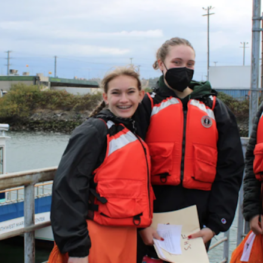
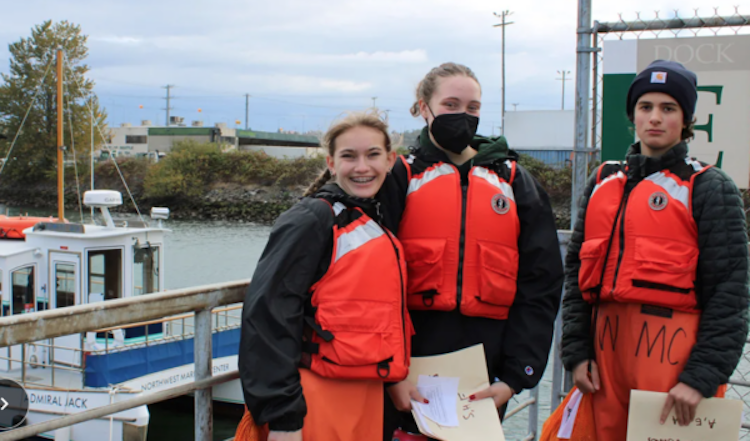
Highline Public Schools may close Maritime High School at the end of the academic year, just five years after opening the specialized program. The school, created to introduce students to maritime careers through hands-on learning and industry partnerships, currently has 83 students, including 14 in ninth grade. That’s far below the 400 originally envisioned. According to a story in The Seattle Times, district officials say it costs approximately $10,000 more per student to operate than other Highline high schools.
“Because state funding and staffing allocations are largely driven by enrollment, lower enrollment means fewer resources to staff and operate the school,” a statement on the Highline School District website said. “After six years, enrollment has not reached the level needed to sustain the current model.”
Parents and students apparently learned of the closure recommendation, made by Superintendent Dr. Ivan Duran, school before the district announced it:
“Some families and staff may have heard about this recommendation before we could share the news directly with the Maritime community as planned. This is not how we wanted to communicate news of this significance,” district officials wrote in their website notice. “Superintendent Duran acknowledged that the community deserved to hear the news directly and have more time to process it. He apologized for how the news was shared.”
According to the Times, of Maritime’s 57 graduates, 35 went on to college, and eight entered the maritime workforce, including four who joined Washington State Ferries. Students, families, staff and community have three opportunities to testify about the proposal:
- November 18 during the Highline School Board
- December 2 during a public hearing about the proposal
- December 9 during the board meeting. A vote on the recommendation is scheduled for that meeting.
To sign up to testify, go to the district’s public testimony information page. Read more on this story.
SPS parents rally to demand Ed Tech policy reform
Parents with kids in Seattle Public Schools rallied before a special meeting of the Seattle School Board on Nov. 4, to demand faster educational technology policy reform in the district. Several parents also expressed fear and frustration that their children—some as young as second grade—are learning about AI at school. If tech reforms are rolling out too slowly, concerned parents said, AI was rolling out too quickly.
“I would like for technology to be driven by educators, rather than business deals,” said Thomas Coffee, an SPS parent and former Google employee.
At the board meeting, SPS leaders announced new recommendations and restrictions for school technology. By January 2027, SPS will no longer assign one device to each child (1:1) for grades K–5. District leaders also recommended a 1-hour screen-time limit for grades 3–5 and said SPS will block YouTube from students. Kids’ access to the platform on all school devices has frustrated parents and teachers. SPS will also prohibit Minecraft and Google Gemini on student devices.
Regarding AI use in the classroom, SPS leaders were less keen on reform, emphasizing “AI literacy” and safety instead of a ban.
“We cannot pretend that this technology doesn’t exist,” said Superintendent Ben Shuldiner. Read the full story.
Voters back restrictions on transgender girls in school sports
It looks like girls will soon have to prove they are girls to participate in school sports. As of Friday, Washington’s Initiative 638, which restricts transgender girls from participating on girls’ K–12 sports teams, led the election returns with nearly 57 percent of voters in favor.
The measure also calls for verification of biological sex for all girls participating in school athletics and bans trans girls from participating. During a contentious run-up to the election, supporters maintained the measure protects competitive fairness in girls’ sports. Opponents said that beyond excluding transgender students, I-638 places unnecessary medical documentation requirements on girls, the costs for which could exclude some kids from participation. A report in The Seattle Times noted health provider concern about the initiative’s imprecise language around how gender can be confirmed and that doing so is outside the norms of school sports exams. According to the National Federation of State High School Associations (NFHS), 79,020 Washington state girls participated in school sports in 2024-2025.
The election results may not be the last word. Legal challenges are expected before the rules are implemented.
Washington was one of four states to approve a ban on transgender girls in sports. Read more from Washington State Standard.
The Good Read: Are school apps keeping parents in the dark?
Parents have never received so many messages from their children’s schools, yet many still don’t know whether their kids are performing at grade level. In an article this week from The Atlantic, one mother describes needing five separate platforms to follow her four children’s education. The problem goes beyond overloaded inboxes. According to research cited in the article, 88% of parents believe their children are reading at or above grade level, even though fewer than half of students meet grade-level expectations in many states. Grades can be misleading, too, because they often reflect effort and completed assignments rather than mastery. Writer Stephanie H. Murray examines how an avalanche of emails, notifications, school portals and messaging apps can bury the information parents actually need and argues that no amount of digital communication can replace a candid conversation between parents and teachers about how a child is really doing. Read the full article in The Atlantic.
Looks like parent-rights law will remain unchanged in Washington
Washington voters appeared poised to reject Initiative 001, a measure seeking to restore broader parental access to certain school records and notifications. The proposal would reverse changes lawmakers made to the state’s Parents’ Bill of Rights and affect how schools handle student information, including counseling and health-related records.
During a heated ramp-up to election day, supporters argued that parents need fuller access to information about their children’s education and well-being. Opponents warned that the measure could compromise students’ privacy, particularly when young people seek confidential help at school. As of Friday, the Washington Secretary of State’s results webpage showed 52.08% of votes against the initiative and 47.92% in favor. Read more.
Tsunami in Seattle? Be prepared for a real possibility
New signs could be going up around Seattle, warning of a danger many Seattle families may not realize exists: tsunamis. That’s because a major earthquake on the Seattle Fault could generate a tsunami within minutes, leaving people in low-lying waterfront areas little time to escape, according to a piece posted last week by South Seattle Emerald. A tsunami caused by a distant Cascadia earthquake would likely allow more time — an estimated 90 to 120 minutes in Puget Sound. The Seattle Department of Transportation (DSOT) is developing plans for signs identifying tsunami danger zones and for directing people toward higher ground. Exact locations and installation dates have not been finalized. Still, signs could start appearing along the Seattle shoreline in 2027, including parts of South Seattle near Harbor Island, the Duwamish Waterway, and West Marginal Way Southwest.
The City does not, however, plan to install tsunami sirens or evacuation towers. Emergency officials urge families to learn whether their homes, schools or workplaces are in tsunami hazard zones and identify routes to higher ground. They stress that shaking earth is the sign to move to higher ground. For a tsunami from far away, alerts will come by phone and social media. Be sure to sign up for emergency alerts from the City at AlertSeattle. Read more.
Washington voters uphold millionaires’ tax, but it’s not a done deal
As of Friday, Washington voters had decisively rejected Initiative 645, an effort to repeal the state’s new tax on high earners. With ballots still being counted, approximately 58% of voters opposed the repeal measure, according to results from the Washington Secretary of State’s office. The Associated Press has called the race. The law imposes a 9.9% tax on annual taxable income exceeding $1 million, beginning in 2028. Revenue will support the state’s general fund, which pays for public education, health care and other services, with a portion specifically designated for early childhood programs. Although votes are still being counted, initiative leaders have conceded the loss.
Although the tax survived the ballot challenge, its future remains uncertain. Opponents have filed a lawsuit arguing that it violates the Washington Constitution. The legal challenge could ultimately determine whether the tax takes effect. To learn more about the tax, check out this pre-election coverage: “I-645 income tax debate shows deep divide.”
Should schools teach kids to ask better questions? | Op-Ed
Schools spend years teaching children to find correct answers. But are students learning how to ask useful questions? In an opinion piece for The Hechinger Report, economics professor Hiranya K. Nath describes asking college students to develop questions for a visiting Federal Reserve official. Despite their academic preparation, students found the assignment unexpectedly difficult.
Nath argues that questioning deserves a larger place in education, particularly as artificial intelligence makes information and ready-made answers easier to obtain. His point for parents and teachers? Curiosity, judgment and the ability to investigate a problem matter as much as knowing the material on a test. Read more the full opinion in The Hechinger Report
Seattle Mariners catcher Cal Raleigh makes a surprise visit
Seattle Mariners catcher Cal Raleigh made a surprise visit to Bailey Gatzert Elementary School on Nov. 4, participating in the school’s literacy field day with more than 400 students. Organized through PEMCO Insurance’s Get Caught Reading with Cal partnership, the assembly included reading games, a question-and-answer session and a read-aloud of The Magical Yet, a children’s book about perseverance. Read more about Raleigh’s reading challenge, which launched last spring.
Introduce your kids to Diwali at public events in Seattle and Bellevue
Families have two opportunities to experience Diwali within a larger community this week. The Festival of Lights, on Nov. 7 from noon to 7 pm., is a celebration hosted by The Bellevue Collection and includes cultural performances and family activities. Seattle Center’s Diwali: Lights of India festival, also on Nov. 7 from noon until 6 p.m. in Armory Food & Event Hall, offers Indian music, dance, art and hands-on experiences. Both celebrations offer kids a chance to explore South Asian cultural traditions and learn about a holiday associated with light, renewal and the triumph of good over evil. Both events are free.
Could math help kids understand democracy?
Why do some voting systems produce different winners? How are legislative districts drawn? And how does the Electoral College translate votes into political power? Two researchers argue that the answers belong in math classrooms as much as civics lessons.
Writing in The Hechinger Report, Anna Saavedra of the University of Southern California and Ismar Volić of Wellesley College describe interviews with 123 educators and curriculum providers in six states. They found strong interest in teaching math and civics together, but few systematic efforts to do so. Their proposal would use statistics to examine voter turnout, fractions to explain representation and mathematical reasoning to evaluate election systems, giving students practical ways to understand the mechanics of democracy. Read more
Will he or won’t he: Governor still mum federal scholarship program decision
Gov. Bob Ferguson has yet to decide whether to opt Washington into the Federal Scholarship Tax Credit (FSTC), despite less than two months to go before the credit program launches in January. FSTC allows taxpayers to receive a $1 in federal tax credit for every $1 donated to qualifying education scholarship organizations—up to $1,700 individually or $3,400 for joint filers. The credits can be used for tutoring, exam fees, and myriad other educational expenses. The scholarships would not be limited to low-income families. In the Puget Sound region, even households earning more than $400,000 a year could qualify. In an article published in The Seattle Times this week, a spokesperson for the governor’s office said Ferguson is doing what he said he would: reviewing the program’s regulations, which were only released earlier this month. That review is apparently finally underway.
Supporters say the program could bring significant new resources to students, including children attending public schools. State Superintendent Chris Reykdal and other critics warn that Washington would have little authority over scholarship organizations, with no assurance that the money would reach families most in need. At least 31 governors have signed their states onto the program. Read more.