“But Mom, you work at Plymouth Housing. Why can’t you help that person?”
We were stopped at a light in Belltown when I drove right past someone sleeping outside. I wished I had the perfect thing to say — but I don’t.
The facts are overwhelming. On any given night in King County, an estimated 18,365 people, including about 1,370 families with children, are experiencing homelessness — sleeping in shelters, in their cars, or on the street.
Every supportive housing apartment that becomes available already has someone waiting for it, and there are never enough homes for everyone who needs one. Many people wait months — or longer — for a home to become available.
This can be a lot to explain to my observant daughters, ages 6 and 8, who care deeply about fairness. Not much gets past them. Once, after I guessed someone’s cultural background, my oldest stopped me.
“Mom, you can’t make assumptions about a person’s identity.”
She was right.
So now, when the topic of homelessness comes up, I worry less about saying the perfect thing and more about how I’m teaching my children to see other people.
These are lessons I first learned as a Japanese-Filipina kid growing up around Pike Place Market. Flower vendors, janitors, fishmongers, artists, unhoused neighbors, security guards, baristas and tourists all helped to create our neighborhood. My grandmother knew countless people by name.
At Obon, the Japanese Buddhist festival where my family honors our ancestors every summer, I saw how no one comes into this world alone. As members of a shared culture, our lives were bound together. When I later learned about the Filipino concept of kapwa — often translated as “shared self”— it challenged me to extend that sense of kinship beyond my own community and recognize the humanity we all share.
No matter who you are, I believe that my humanity is inseparable from yours. When I recognize yours, I recognize my own. Rather than asking, “What did this person do wrong?” I want to ask instead, “What happened?” and “What conditions shaped this person’s life?”
It might have been a lost job, a health crisis, the death of a loved one, or escaping violence.
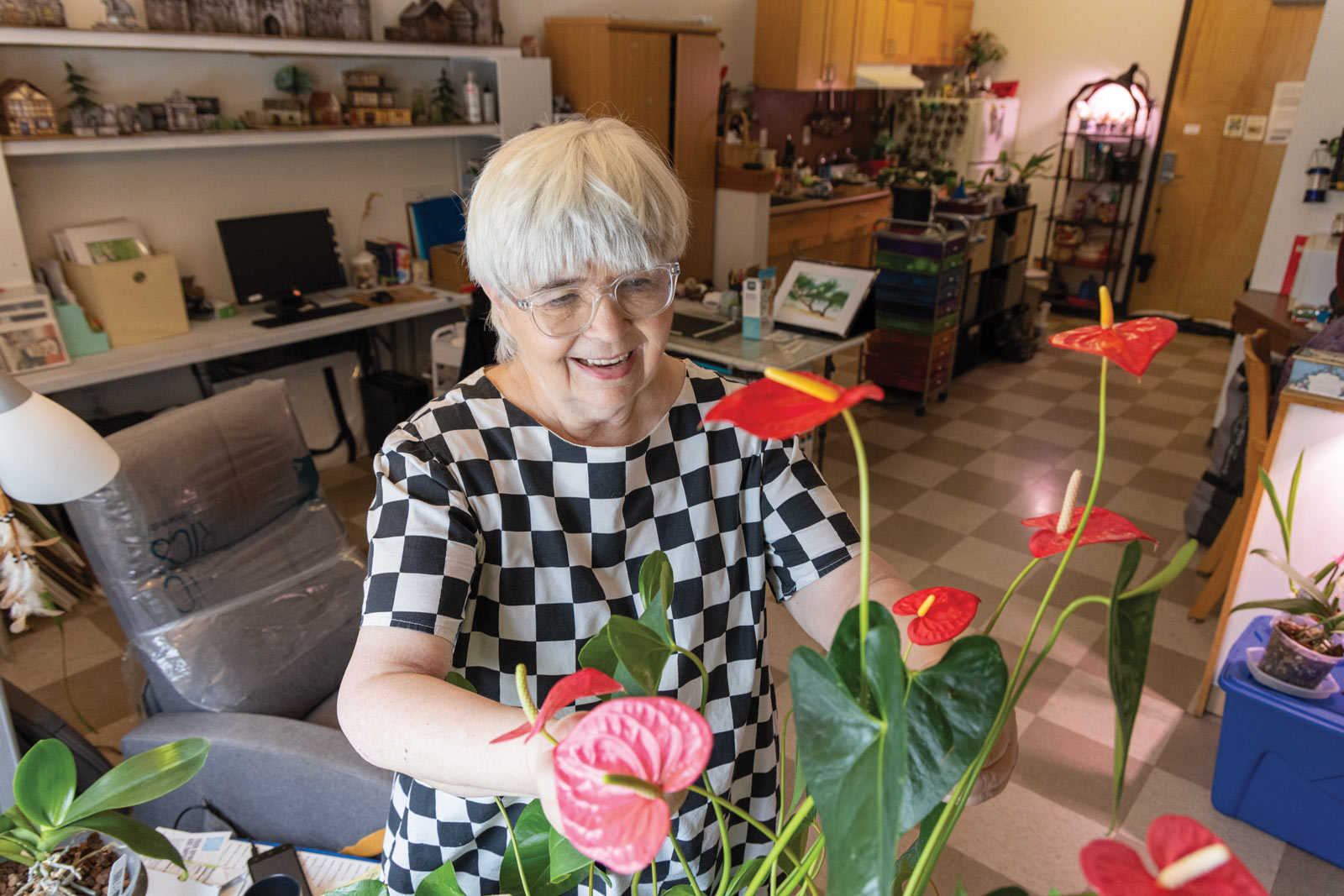
My friend Deb, a Plymouth resident and board member, had to choose between paying her doctor and paying her rent.
“Which would you choose?” I ask my girls.
There isn’t a good answer, and that’s the point.
When my daughters ask whether someone experiencing homelessness is dangerous, I tell them it’s always okay to move your body away from someone who is yelling or acting unpredictably. We can protect our safety without deciding someone is bad. Sometimes behavior like this is a sign that someone needs help, not a reason to stop caring about them. I’ve met people who used substances to stay awake at night so they wouldn’t be assaulted, or to cope with unbearable circumstances beyond their control.
In King County, Black people make up about 6% of the population but 24% of people experiencing homelessness. Indigenous people make up less than 1% of the population but 15% of those experiencing homelessness, according to data from Chief Seattle Club. It’s another opportunity to ask “What happened?” with my daughters. We deepen the complexity of our conversations about slavery, colonization, racial exclusion — and inequities in housing, education, health care, employment, and the justice system.
It would be simple to reassure my daughters that homelessness happens to other people — as long as we make the “right” choices, we’ll be okay. It’s a comforting story because it creates distance between “us” and “them.” But I don’t believe that distance is real.
What I can do is teach my daughters to understand that they have a choice in what kind of world they want to help create. They can choose to see the whole person — and let that guide whatever comes next.
Sometimes that’s volunteering or donating. Sometimes it’s voting for more housing. Sometimes it’s giving someone a few dollars. Sometimes it’s simply making eye contact, learning someone’s name, or saying hello.
I hope that years from now, when they pass someone sleeping outside, they will see one of their own: a human being worthy of care, love and safety.
Because there is no “them.” There is only us.