Being a parent is nonstop hard work, making it challenging to stay on top of news that impacts families in Washington state. This Hits Home is your weekly hit of news, commentary, and, occasionally, opinion. Want to have a say in the news that impacts your kids or family? Look for the ‘Take action’ prompts. Here’s the update for the week of Feb. 2-8.
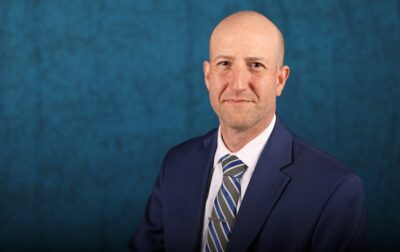
Ben Shuldiner, Superintendent of Seattle Public Schools. (Image: SPS)
A difficult moment met with a strong message
On Jan. 30, two Rainier Beach High School students were shot and killed at a bus stop near South Shore PreK-8 School and the high school. Seattle Public Schools’ (SPS) new Superintendent Ben Shuldiner was sworn into office Feb. 2, but he set the tone of his leadership even before taking his oath. In a heartfelt email to the SPS community on Feb. 1, he acknowledged and joined in the community’s grief and anger. Then he challenged the community to stand up:
“Tomorrow must be the day for us all to come together and act,” Shuldiner wrote. “Gun violence is a scourge on our community and our country. Youth homicide is a terrible action, but its occurrence is holistic in nature. It happens because we, collectively, have not stopped it. Thus, I ask that each and every one of us think critically about what we can do to address this issue. How can we make our streets safer and our children free from harm?”
Shuldiner noted the organizations and individuals working to stop gun violence: “I know there are already amazing and wonderful people working on this…I know the School Board is doing everything they can to help. But, as the superintendent, I am asking that we all — all 50,000 students, all the families, and all the denizens of Seattle — rally together.”
The new superintendent made it clear that community input will be a cornerstone of his stewardship of Seattle Public Schools:
“How can we help to address this issue?” Shuldiner wrote. “I am open to ideas. I am open to conversation. I am open to anything we can do to stop one more child from dying. Please feel free to email me. I know that together, we will be able to move forward.”
TAKE ACTION: Take SPS Superintendent Ben Shuldiner at his word. Email him directly with your thoughts and concerns about gun violence and any other school concerns at [email protected].
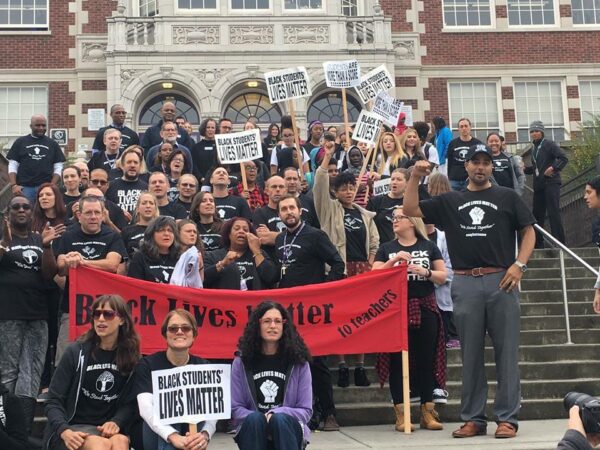
Black Lives Matter in Schools launched in 2016 (Image: iamaneducator.com)
Seattle-born Black Lives Matter in Schools celebrates a decade
When members of Equitable Educations in Seattle worked with staff at John Muir Elementary in South Seattle to organize the first districtwide Black Lives Matter at School Day in 2016, they had no idea how far the event would reach. That day, nearly 3,000 educators across Seattle wore specially-designed shirts to school celebrating black lives and, alongside parents, the NAACP, and community members, they taught lessons on the Black freedom struggle.
Last week, the national Black Lives Matter in Schools movement that was born here celebrated its 10th year—and welcomed the city proclamation of Feb. 2, 2026 of Black Lives Matter at School Day.
Don’t miss Jesse Hagopian’s reflections on the importance of that day in 2016, and the movement it launched, in the South Seattle Emerald. Hagopian, a Seattle-based educator and author of “Teach Truth: The Struggle for Antiracist Education,” was there and serves on the national steering committee of Black Lives Matter at School. Read his comments at South Seattle Emerald.
Seattle’s Screentime Consultant testifies in Congress
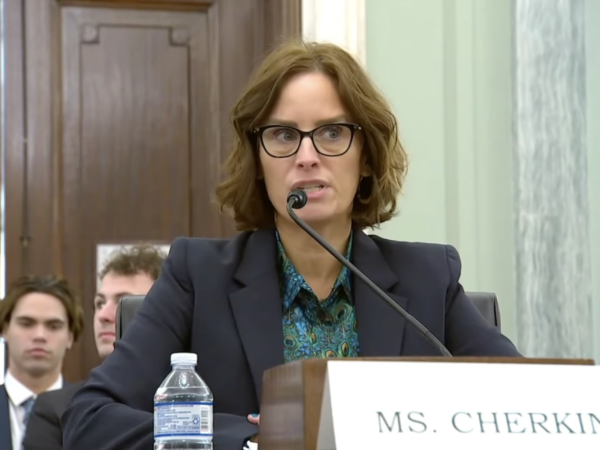
Anti-Ed Tech advocate Emily Cherkin testifies in Washington D.C. Jan. 14, 2026.
Emily Cherkin, a Seattle mom, former teacher, and author who helps families and schools navigate the digital age under the moniker “The Screentime Consultant,” recently took her fight against overuse of technology in education (Ed Tech) to Congress.
During an impassioned presentation to the U.S. Senate Committee on Commerce, Science, and Transportation, Cherkin described technology business models as fundamentally “at odds” with healthy child development.
“Nearly 90% of American public schools provide children with internet-connected devices [and] 26% percent of 13- to 17-year-olds use ChatGPT to do their schoolwork,” Cherkin pointed out, among other statistics regarding digital use by kids.
Cherkin was in Washington, D.C., to voice her support for the proposed Kids Off Social Media Act, which aims to protect children by banning social media accounts for those under 13. The proposal is co-sponsored by Washington Sen. Patty Murray (D-Bothell) and would, among other things, prohibit companies from using algorithms to push content to users under 17 and require schools to block social media on their networks in order to receive cost-discounted telecommunications, internet access, and internal network connections.
She then used an attention-getting analogy to make her point in her testimony: “The juxtaposition of childhood innocence and technology’s overreach can be seen in this anecdote: Middle schoolers, still losing their baby teeth, think it’s funny to imitate the sex noises they hear from watching online content.” Watch Cherkin’s testimony here.
TAKE ACTION: Have an opinion on the use of technology in the classroom or the Kids Off Social Media Act? Reach out to your members through congress.gov.
Lawmakers grapple with a child welfare system
The numbers stopped lawmakers in their tracks last week. In 2025, 22 Washington children connected to the child welfare system died, and 35 more suffered near-fatal injuries, the highest total the state has recorded. About half involved opioids, and babies and toddlers under age 3 were the most vulnerable. All of the 57 deaths or injuries have been involved in previous child welfare cases, a detail that underscores how hard it can be to keep very young children safe even if concerns have already been flagged.
In response, lawmakers are narrowing their focus after a broad proposal to improve the Washington child welfare system stalled in the current legislative session. That sweeping legislation would have expanded access to legal counsel for at-risk mothers and embedded nurses in families with open Child Protective Services cases. Lawmakers will realize such actions through state budget negotiations.
Legislation still in play is more targeted, including House Bill 2660, which would give courts greater oversight in cases involving children under age 5 who stay at home rather than entering foster care. A separate proposal in the Senate, Senate Bill 6319, would keep some Washington Child Protective Services (CPS) investigations open longer when young children and high-potency opioids are involved.
For parents, this moment is about trade-offs—and trust. The state is grappling with how to protect its youngest children without crossing constitutional lines or overwhelming families already under scrutiny. Supporters say the measures could identify potential danger early, especially for infants and toddlers not yet in child care or school. Critics worry about maintaining a reasonable balance between expanded surveillance and family privacy. What’s clear is this: the current system is not preventing the most devastating outcomes. Read the full story by Washington State Standard.
TAKE ACTION: To make your voice heard on HB 2660 or SB 6319, reach out to your representatives in the state House and Senate.
The Good Read: Baby Giggle Brilliance

(Image: iStock.com)
If you have been the parent of a newborn, you know the unfettered joy of hearing your child’s first belly laugh — that uninhibited hiccuping chortle escaping through a drooly, wide-open mouth. It’s the sound of pure happiness. And possibly something else, as this wonderful story in the New York Times reports. This feel-good read (and listen) will bring you right back to that moment. Listen, laugh, and learn.
Not this year: Several kid-focused bills fail in 2026 Legislature
Washington lawmakers have come at protecting kids online from a number of directions during the current session of the state legislature, which ends March 12. But last week, some of those efforts were left on the cutting room floor:
House Bill 2400, a proposal meant to protect children whose lives are broadcast for profit online—often by their own families. The bill would have given young adults the right to request the removal of videos they appeared in as children and require platforms to set up trust accounts so kids could eventually share in the money earned from their likeness. It was a no-go for lawmakers who gave parents a familiar message: the risks are well documented, the solutions are complicated, and for now, the responsibility still sits squarely at home.
Same story with Senate Bill 6111, which would have required parental consent before minors under 17 could open social media accounts. The bill fizzled out after tech industry groups argued it crossed constitutional lines by restricting free speech. Lawmakers didn’t move it forward.
And a third miss: House Bill 2112 would have required websites to verify that a user is age 18 or older, if one-third of the site content is sexual material harmful to minors. I wrote in an op-ed here last week, failed to pass out of committee on time, even with bipartisan support and painful and moving testimony from parents.
TAKE ACTION: How do you feel about lawmakers’ decision (or lack of decision) on bills that seek to protect kids from online harm? Whatever your position, reach out to your representatives in the state House and Senate.
The Art of Reflection
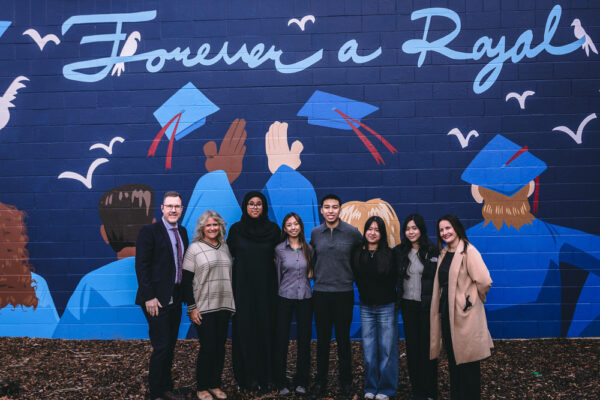
Kent-Meridian High School memorial mural. (Image: Kent School District)
Most adults can look back and remember a peer who died—for too many of us, it was a fellow student who passed away during our time in high school. For me, it was a boy named Paul who died in a car crash near Governor John R. Rogers High School way back in the 80s.
Like so many kids who experience the death of a peer, I didn’t know what to do with my grief, which may be why I still get teary when I think about Paul. I’m sure that memory is why I was moved by the recently unveiled mural created by students at Kent-Meridian High School. Response to the mural speaks to what kids need to navigate grief and confusion: a place to pause, reflect, and grapple with the uncomfortable truth that death often comes unexpectedly and too soon. Check out their story in The Seattle Times.
Doulas Helping Moms Who’ve Struggled with Addiction

(Image: C. Murfin)
A story last week in the Washington State Standard offers hope to pregnant parents with histories of addiction. The article told the stories of women determined to beat addiction and the birth and postpartum doulas committed to helping them avoid pain relief drugs during labor and delivery.
Many of those doulas, former addicts themselves, personally understand what the laboring moms are going through. They understand that exposure to pain medication, especially opiates, in labor can mean the difference between remaining a drug-free parent and a painful return to drug abuse. The story is a great read and a good resource for expectant parents.
It should be noted that the number of infants born with Neonatal Abstinence Syndrome (NAS)—a condition indicating withdrawal from drug exposure—has been rising in Washington state, according to a report published by Washington State University Health Sciences. In 2022, the rate in Washington was 11.2 per 1,000 babies born or 1.2% of babies: “The Washington rate increased year-over-year from 2019 to 2022 while the national rate of NAS has remained stable,” the report said.
As of January 2025, Washington’s Medicaid program covers doula services, offering one of the nation’s highest reimbursement rates at $3,500 for certified doulas. Billing is handled through the Washington Health Care Authority.

Gun found at Phantom Lake Elementary (Image: Bellevue Police Department)
Too-slow reveal of gun found at Bellevue elementary school
Over winter break, when Phantom Lake Elementary was quiet and classrooms sat empty, a janitor discovered something that doesn’t belong in any school building: a loaded Glock pistol left behind in a boys’ bathroom. The gun, discovered Dec. 21, 2025, was linked to a Sunday church service that’s been held in the building for years, according to a report on KUOW.
The fact that a firearm sat unnoticed in the Bellevue elementary school and that parents, staff, and police were not notified until a month after the discovery has rattled the school community. The owner of the weapon told Bellevue Police he forgot it while using the restroom. He’s now been barred from Phantom Lake Elementary School property. But parents still have questions: how a weapon ended up in an elementary school, why law enforcement wasn’t contacted immediately, and what safeguards are in place to make sure it never happens again.
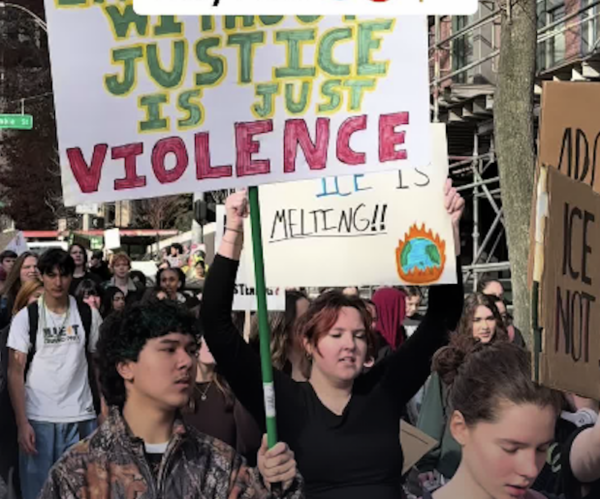
Seattle student ICE Out protest (Seattle Gay News TikTok)
Just before mid-morning Monday, hundreds of high school students stepped out of class and into the rain, turning school hallways into a staging ground for protest. At Highline High School in Burien, the front doors swung open and roughly 500 students — more than a third of the campus — walked out together, calling for an end to federal immigration enforcement they say is tearing families apart. The demonstration, organized under the banner “ICE Out,” echoed across the Highline and Renton districts, with students from Evergreen, Mount Rainier, Raisbeck Aviation, Lindbergh, and Big Picture high schools joining in.
The walkouts weren’t isolated occurrences. Students in West Seattle, Auburn, and other communities had done the same just days earlier as part of a nationally coordinated day of action. And then on Thursday, hundreds more students gathered at Seattle City Hall to continue the student protest over U.S. Immigration and Customs Enforcement’s aggressive and deadly tactics across the country.
For many of these teens, the issue isn’t abstract or political — it’s personal, tied to classmates, neighbors, and family members living with very real uncertainty and fear of detainment. By walking out of their classrooms and their right to a day of education, they have been offering us all a different kind of lesson: That civic action is a right of each of us, that it sometimes is a necessity when your voice needs to be heard, and that it is a responsibility young people take seriously. Even when the rain is cold, and the consequences are unclear. Check out The Seattle Times’ coverage of the walkout.
TAKE ACTION: If you, your teens, or your family are interested in peaceful gatherings to protest U.S. Customs and Immigration tactics in cities across the country, the grassroots organization Seattle Indivisible offers a calendar of protest dates, times, and locations. Several are planned for Valentine’s Day, Feb. 14. Event organizers stress: “This is a peaceful protest movement. We oppose violence, vandalism, and destruction of property.”
Governor rejects first attempt at income tax, child advocates say yes
Washington Gov. Bob Ferguson said he wanted lawmakers to give him a “millionaire’s tax” to equitize the state’s tax income. Last week, he told them their first attempt to do just that, Senate Bill 6346, wasn’t good enough to receive his signature.
That’s not stopping Children’s Alliance, the statewide child advocacy organization, from pushing for its passage. In an email last week, the Alliance asked supporters to flood the Senate Committee on Ways & Means with PRO positions when the proposal was heard on Feb. 6. The committee is scheduled to take action on the bill in executive session on Feb. 9.
“Senate Bill 6346 would enact a 9.9% tax on earnings above $1 million, ensuring that the wealthiest Washingtonians pay what they owe to support programs and services that benefit us all,” the nonprofit wrote. “In a state as prosperous as ours, working families should be able to build a future without being weighed down by an inequitable tax system.
“Washington,” the group added, “has the second most regressive state and local tax system in the country, relying heavily on sales and property taxes that hit households with low and middle incomes the hardest. This bill represents an opportunity to rebalance our upside-down tax code.” Read the story on Gov. Bob Ferguson’s stance at Washington State Standard. Follow coverage of the opening legislative debate on the tax on the Standard’s website.
Also check out this recent article: Washington schools superintendent pitch: Spend income tax on education.
TAKE ACTION: The idea of a wealth tax has been controversial in Washington. Where do you stand? Whatever your position, speak out to representatives in the state House and Senate.